
10 Easiest Fish to Care For (Proven Beginner’s Guide)

Every year, thousands of beginners buy the wrong fish — and watch them die within weeks. It’s not bad luck. It’s a mismatch between fish needs and tank conditions, and it’s completely avoidable.
This guide covers the easiest fish to take care of, so your first aquarium experience is a success, not a frustration. Whether you’re setting up a simple bowl or a 10 gallon starter tank, there’s a perfect fish on this list for you.
You’ll learn which species are the hardiest, what basic care each one needs, how to set up a low maintenance freshwater tank, and which fish work best together for beginners.
What Are the Best Low Maintenance Freshwater Fish?
Low maintenance freshwater fish are species that don’t require strict water parameters, eat commercial flake food, and stay healthy without complicated care routines. The best ones for beginners share a few traits: they’re hardy, adaptable, and forgiving of beginner mistakes.
Top low maintenance freshwater fish include Guppies (thrive at 72–82°F, eat flakes), Mollies (tolerate hard water and even brackish tanks), Corydoras Catfish (clean the substrate and stay peaceful), and White Cloud Mountain Minnows (survive without a heater in room-temperature water).
These fish are widely available at pet stores, inexpensive, and well-documented — so finding care advice is always easy. For a stress-free first tank, any of these species will reward you with years of enjoyment.
Pro Tip: Always cycle your tank before adding fish. Even the hardiest species suffer in an uncycled aquarium. Run your filter for 4–6 weeks before adding any fish, or use a bottled bacteria starter like Tetra SafeStart to speed up the process.
Why Are Hardy Fish for Beginners Easier to Keep Alive?
Hardy fish for beginners survive water parameter fluctuations that would stress or kill more sensitive species. Their resilience comes from their natural habitat — many hardy aquarium fish originate from rice paddies, slow rivers, and seasonal pools where conditions constantly change.
Species like Guppies, Platies, and Zebra Danios evolved to handle swings in temperature, pH, and oxygen levels. This built-in toughness means that even beginner mistakes — like slightly overfeeding, missing a water change, or improper cycling — won’t immediately cause a crash.
Sensitive fish like Discus, Cardinal Tetras, or Otocinclus require near-perfect water chemistry. Hardy species give you the margin for error you need while you’re still learning the hobby.
Warning: Never add fish to a brand-new tank on day one. ‘New tank syndrome’ — ammonia and nitrite spikes in uncycled water — kills more beginner fish than anything else. Always test your water before adding any livestock.
The 10 Easiest Fish to Take Care of (Full List)
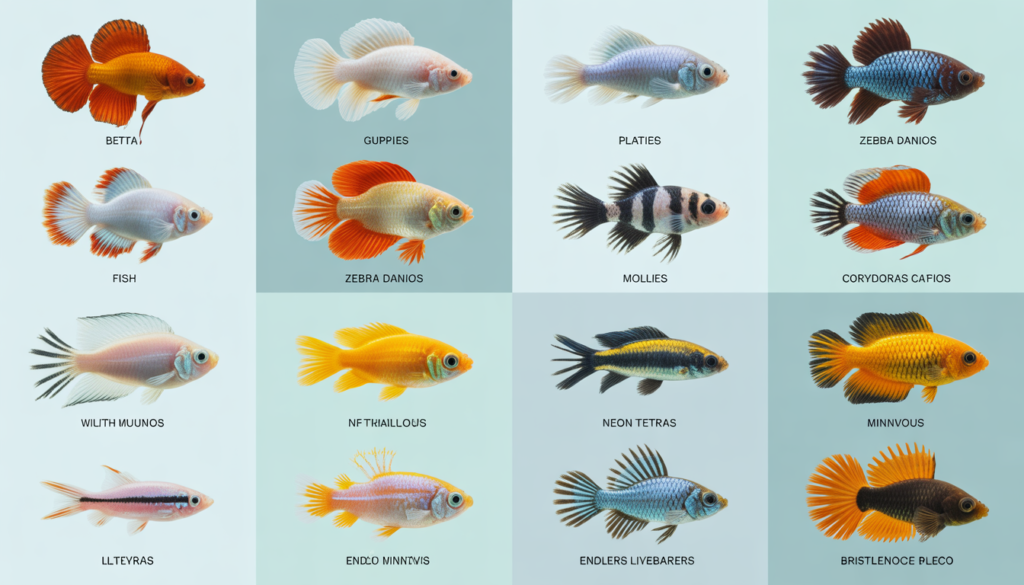
Here are the top 10 easy fish to take care of, ranked for beginner-friendliness. Each profile covers tank size, water parameters, and key care tips.
1. Betta Fish (Betta splendens)
The Betta is the single most popular beginner fish — and for good reason. One male Betta can live comfortably in a 5 gallon tank with a gentle filter and a heater set to 78°F.
• Tank Size: 5–10 gallons minimum
• Water Temp: 76–82°F
• Diet: Pellets, frozen bloodworms
• Lifespan: 2–5 years
• Beginner Rating: ⭐⭐⭐⭐⭐
Keep only one male per tank — Bettas are aggressive toward each other. Females can sometimes be housed in groups called ‘sorority tanks,’ but this requires experience.
2. Guppies (Poecilia reticulata)
Guppies are arguably the hardiest fish for beginners. They breed easily, eat almost anything, and tolerate a wide pH range of 6.8–7.8. A group of 6 guppies thrives in a 10 gallon tank with weekly water changes.
• Tank Size: 10 gallons for a group of 6
• Water Temp: 72–82°F
• Diet: Flakes, micro pellets, frozen daphnia
• Lifespan: 1–3 years
• Beginner Rating: ⭐⭐⭐⭐⭐
Quick Tip: Keep a 2:1 female-to-male ratio with Guppies to prevent males from harassing females. A ratio of 4 females to 2 males works perfectly in a 10 gallon tank.
3. Platies (Xiphophorus maculatus)
Platies are one of the most disease-resistant easy-to-care-for fish available. They come in dozens of color morphs, eat flake food eagerly, and get along with almost every peaceful community species.
• Tank Size: 10 gallons
• Water Temp: 70–80°F
• Diet: Flakes, algae wafers, blanched vegetables
• Lifespan: 3–5 years
• Beginner Rating: ⭐⭐⭐⭐⭐
Platies are livebearers — they give birth to live young instead of laying eggs. If you mix males and females, expect fry regularly. A breeding trap helps protect the fry if you want to raise them.
4. Zebra Danios (Danio rerio)
Zebra Danios are one of the toughest low maintenance freshwater fish in the hobby. They survive temperatures from 64–77°F, tolerate a wide range of pH levels, and stay active and visible — making them great for beginners who want an engaging tank.
• Tank Size: 10 gallons for a school of 6
• Water Temp: 64–77°F (no heater needed in warm rooms)
• Diet: Flakes, micro pellets, live or frozen food
• Lifespan: 3–5 years
• Beginner Rating: ⭐⭐⭐⭐⭐
Danios are schooling fish — keep at least 6 together so they feel secure. A single Danio or a group of 3 will become stressed and may hide or fin-nip.
5. Mollies (Poecilia sphenops)
Mollies are easy to care for fish that uniquely tolerate both freshwater and slightly brackish conditions. They’re great algae grazers, extremely peaceful, and adapt well to most community tanks.
• Tank Size: 20 gallons recommended for a group
• Water Temp: 72–82°F
• Diet: Flakes, algae wafers, blanched zucchini
• Lifespan: 3–5 years
• Beginner Rating: ⭐⭐⭐⭐
6. Corydoras Catfish (Corydoras paleatus)
Corydoras are peaceful bottom-dwellers that double as tank cleaners, scavenging leftover food from the substrate. They’re one of the best easy-to-care-for additions to any community aquarium.
• Tank Size: 10 gallons for 4–6 fish
• Water Temp: 70–78°F
• Diet: Sinking pellets, wafers, frozen bloodworms
• Lifespan: 5–10 years
• Beginner Rating: ⭐⭐⭐⭐⭐
Always keep Corydoras in groups of at least 4–6 — they’re social fish that stress when isolated. They also need smooth substrate (fine sand or rounded gravel) to protect their sensitive barbels.
⚠️ Warning: Never use sharp gravel with Corydoras. Rough or jagged substrate damages their barbels — the small whisker-like feelers they use to find food. Use fine sand or smooth pea gravel instead.
7. White Cloud Mountain Minnows (Tanichthys albonubes)
White Cloud Mountain Minnows are cold-water fish that don’t need a heater — making them one of the most truly low maintenance freshwater fish available. They thrive at 60–72°F and are ideal for unheated indoor tanks.
• Tank Size: 10 gallons for a school of 6–8
• Water Temp: 60–72°F (no heater required)
• Diet: Micro pellets, flakes, daphnia
• Lifespan: 3–5 years
• Beginner Rating: ⭐⭐⭐⭐⭐
These minnows are often described as a ‘poor man’s Neon Tetra’ due to their similar striped appearance at a fraction of the price. They’re peaceful, active, and rarely get sick.
8. Neon Tetras (Paracheirodon innesi)
Neon Tetras are iconic beginner fish — small, peaceful, and visually electric. Their vivid blue and red stripe is one of the most recognizable sights in the aquarium hobby.
• Tank Size: 10 gallons for a school of 6–10
• Water Temp: 68–78°F
• Diet: Micro pellets, flakes, frozen baby brine shrimp
• Lifespan: 5–10 years
• Beginner Rating: ⭐⭐⭐⭐
Neon Tetras are slightly more sensitive than Guppies or Danios — they prefer soft, slightly acidic water (pH 6.0–7.0) and don’t handle ammonia spikes well. Always add them to a fully cycled tank.
9. Endlers Livebearers (Poecilia wingei)
Endlers are a close relative of the Guppy and share the same hardiness — but stay even smaller (under 1 inch), making them perfect fish for a 10 gallon tank beginner setup. Males display brilliant neon colors.
• Tank Size: 5–10 gallons
• Water Temp: 72–82°F
• Diet: Micro pellets, flakes, live baby brine shrimp
• Lifespan: 2–3 years
• Beginner Rating: ⭐⭐⭐⭐⭐
10. Bristlenose Plecos (Ancistrus sp.)
The Bristlenose Pleco is the best beginner algae-eating fish. Unlike Common Plecos that grow to 18 inches, Bristlenoses stay under 5 inches and work hard keeping glass and décor clean.
• Tank Size: 20+ gallons
• Water Temp: 72–80°F
• Diet: Algae wafers, driftwood, blanched zucchini
• Lifespan: 10–15 years
• Beginner Rating: ⭐⭐⭐⭐
Bristlenose Plecos need a piece of driftwood in their tank — they rasp on wood as part of their natural diet and digestive process. Mopani or Spider wood works well and looks natural.
📖 WHAT IS A HARDY FISH? A hardy fish is a species that tolerates a wide range of water parameters — including fluctuations in temperature, pH, and ammonia — without becoming stressed or sick. Hardy fish for beginners evolved in unstable natural environments, giving them built-in resilience that makes them forgiving of beginner mistakes.
FAQs About the Easiest Fish to Take Care of
Q: What is the easiest fish to take care of for a complete beginner?
A single male Betta fish in a 5–10 gallon heated tank is the easiest fish to take care of for a complete beginner. Bettas are hardy, don’t need tank mates, and adapt to most tap water conditions. Feed once a day and change 25% of the water weekly.
Q: What easy fish to take care of don’t need a heater?
White Cloud Mountain Minnows and Zebra Danios are the best easy-to-care-for fish that don’t need a heater. Both thrive at room temperature (60–72°F) in a standard indoor environment, making them ideal for truly low maintenance setups.
Q: How many fish can I put in a 10 gallon tank for a beginner?

A good rule of thumb is 1 inch of adult fish per gallon. A 10 gallon tank can comfortably hold 6–8 Neon Tetras, 6 Guppies, or 4–5 Platies. Always understock rather than overstock — overcrowding is the most common beginner mistake.
Q: Can I mix different easy-to-care-for fish in one tank?
Yes — many easy fish to take care of thrive in community tanks. A great beginner combination for a 10 gallon is 6 Neon Tetras + 4 Corydoras Catfish. They occupy different tank levels, share similar water needs, and never compete or harass each other.
Q: How often do I need to feed low maintenance freshwater fish?
Feed small amounts once or twice daily — only what your fish consume in 2 minutes. Overfeeding is a leading cause of poor water quality in beginner tanks. Uneaten food rots and produces ammonia, which can crash your water chemistry quickly.
Q: Do hardy fish for beginners still need water changes?
Yes. Even the hardiest fish for beginners require a 25–30% water change weekly to remove nitrates and replenish minerals. Water changes are the single most effective way to keep any fish healthy long-term, regardless of how easy they are to keep.
Q: Can easy fish to take care of live in a tank without a filter?
Most easy fish to take care of still need a filter for biological and mechanical filtration. The only exception is a single Betta in a small planted tank with very light feeding and frequent water changes. For all other setups, a filter is non-negotiable.
Final Thoughts on the Easiest Fish to Take Care of
Starting your aquarium journey with the right fish makes all the difference. The easiest fish to take care of — Bettas, Guppies, Platies, Danios, and Corydoras, are hardy, forgiving, and genuinely rewarding to keep.
Set up your tank correctly, cycle it before adding fish, and match your fish to your tank size. Follow those three rules, and you’ll have a thriving aquarium that practically runs itself.
Have a question about your first fish choice? Drop it in the comments below — or check out our related guide on how to cycle a fish tank for beginners.